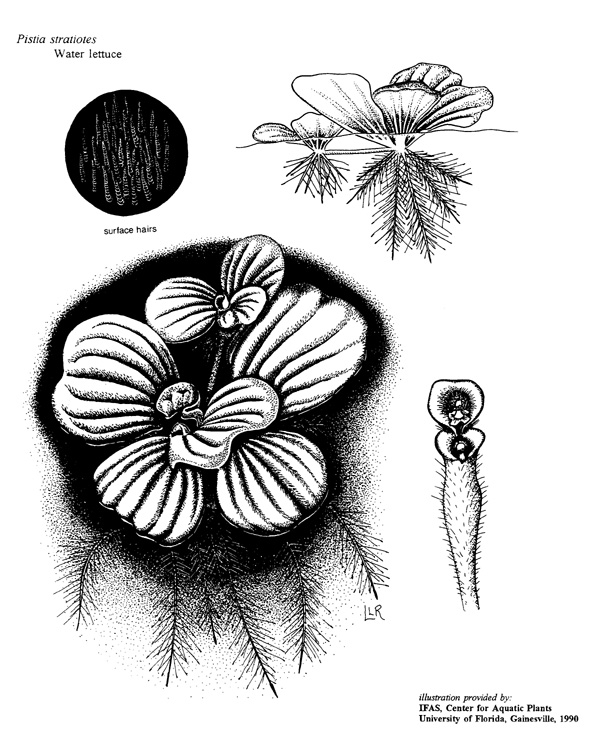
Water lettuce
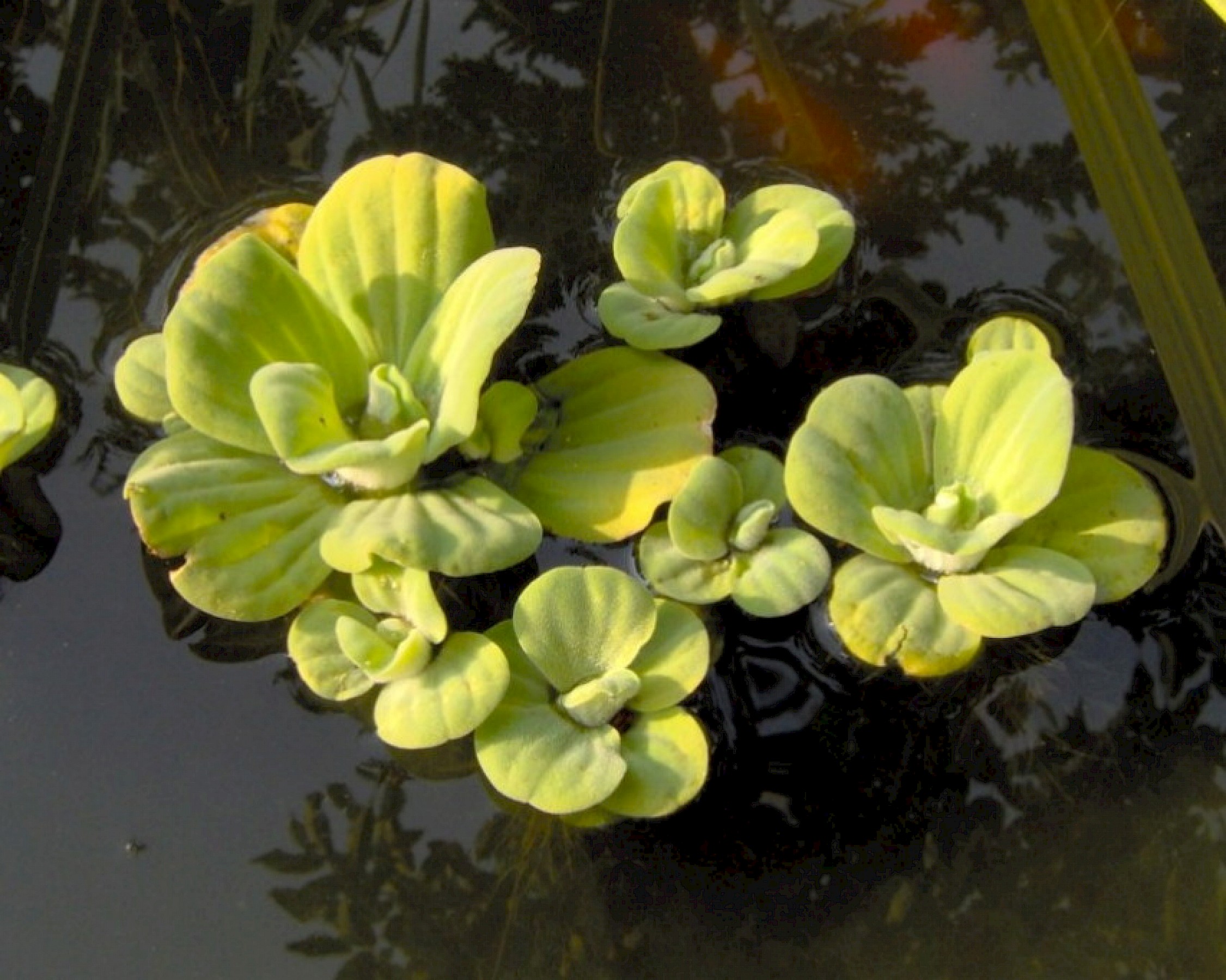
Native to: global tropics and subtropics
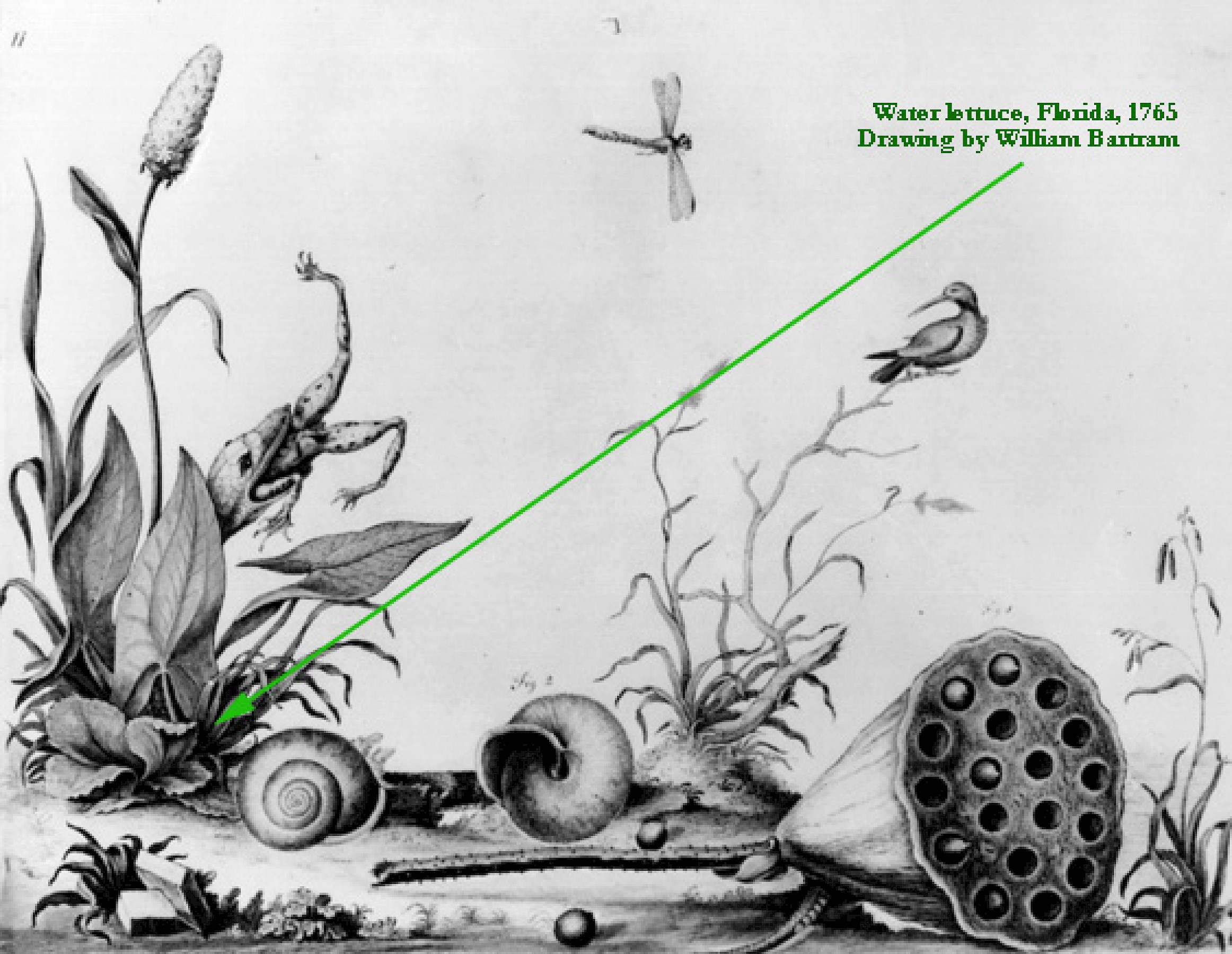
Considered to be one of the most widely distributed aquatic plants globally, its true native distribution is a bit unclear. Its widespread distribution in most countries with a tropical climate may be the result of its ancient use as medicine for humans, as well as its use as fodder for cattle and pigs. Both fossil records and its description by William Bartram in the 1700s call its status as non-native to Florida into question. However, it does clearly invade and alter aquatic systems in Florida where it was not previously known to be present. Water lettuce spreads rapidly via new daughter plants from horizontally growing stolons, produces copious amounts of viable seed, and can regenerate and start new populations from plant fragments. For more detailed life history see Biology and Control of Aquatic Plants: Chapter 2:12.
Family: Araceae
Habit: floating aquatic herb.
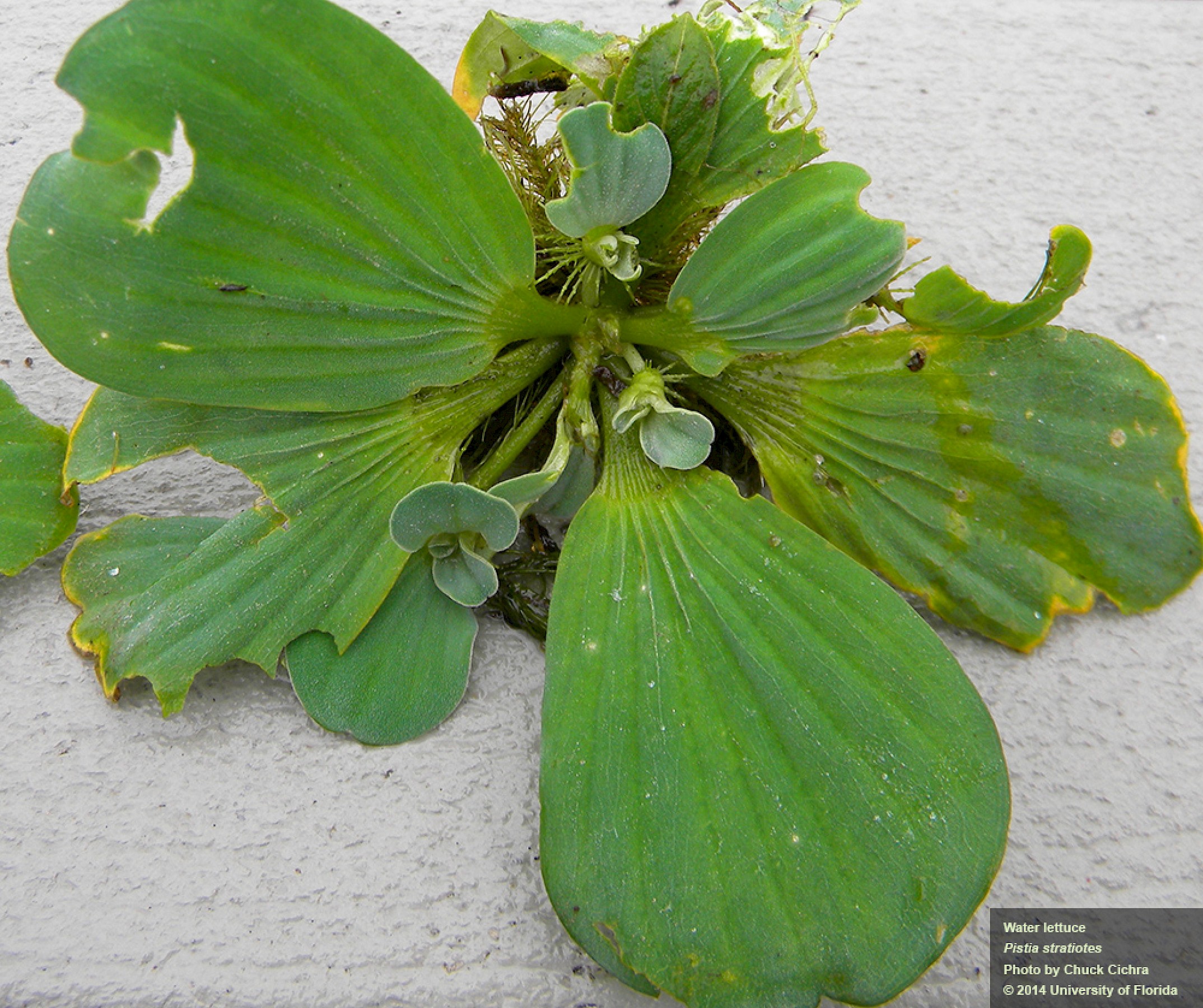
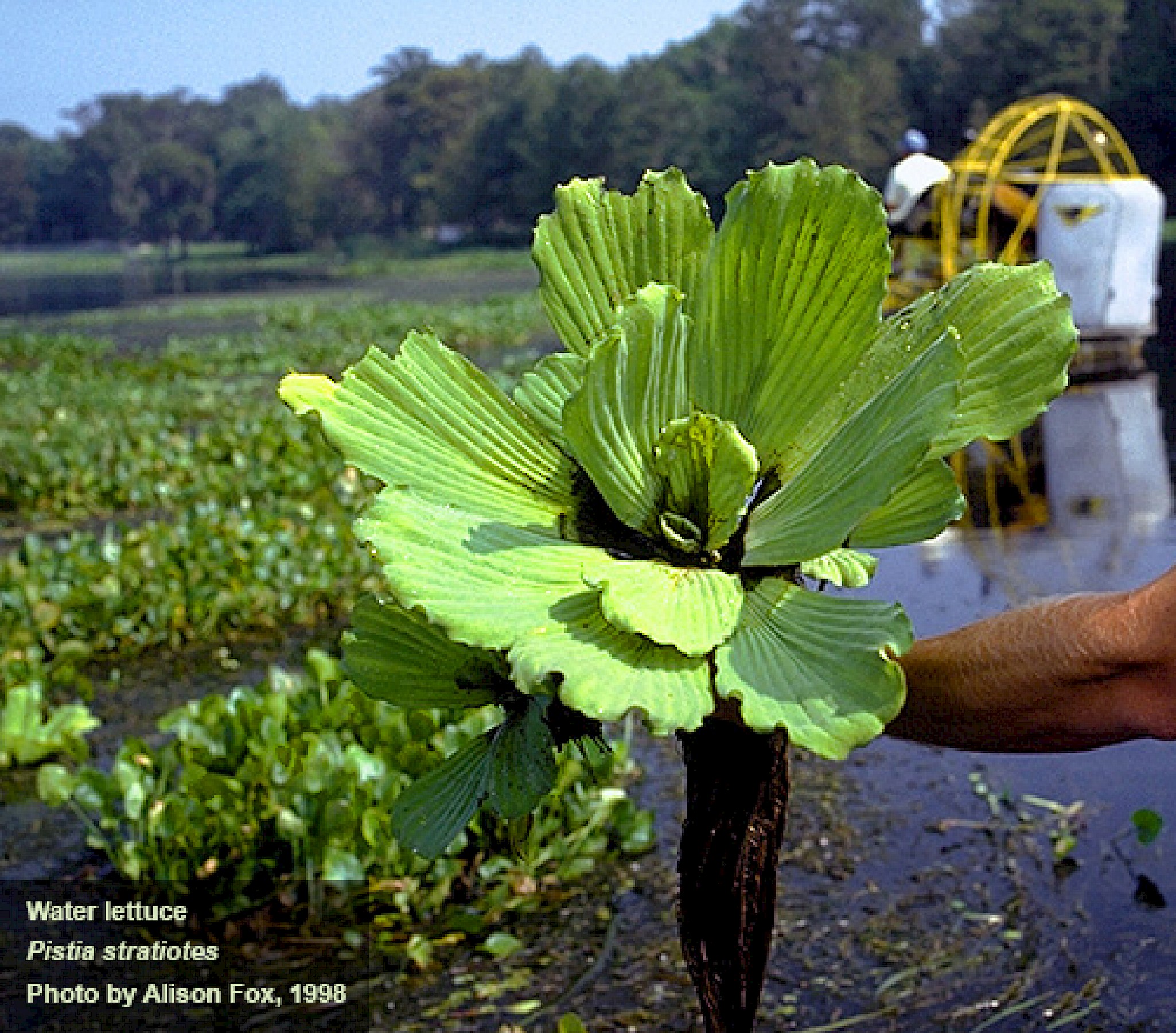
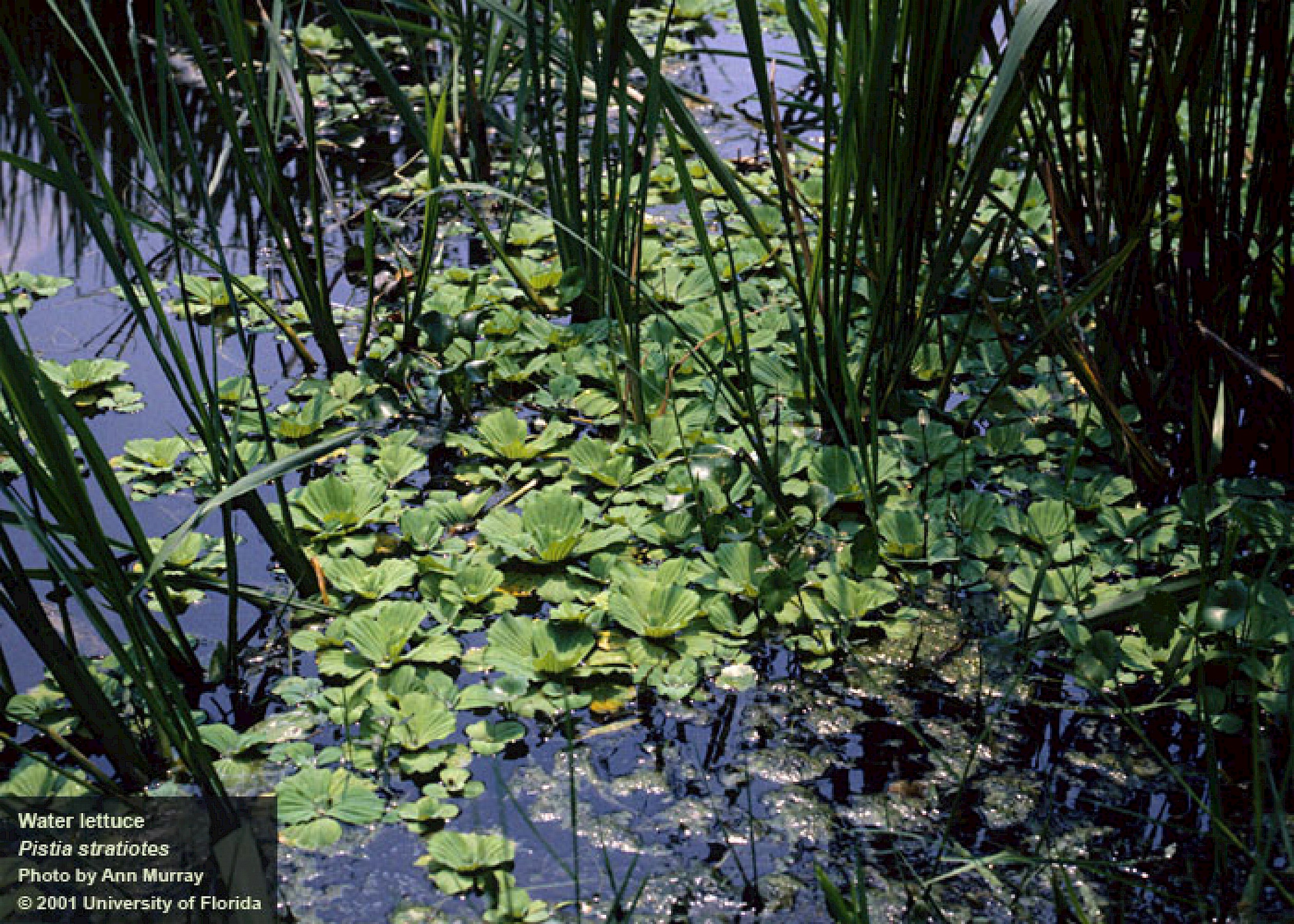
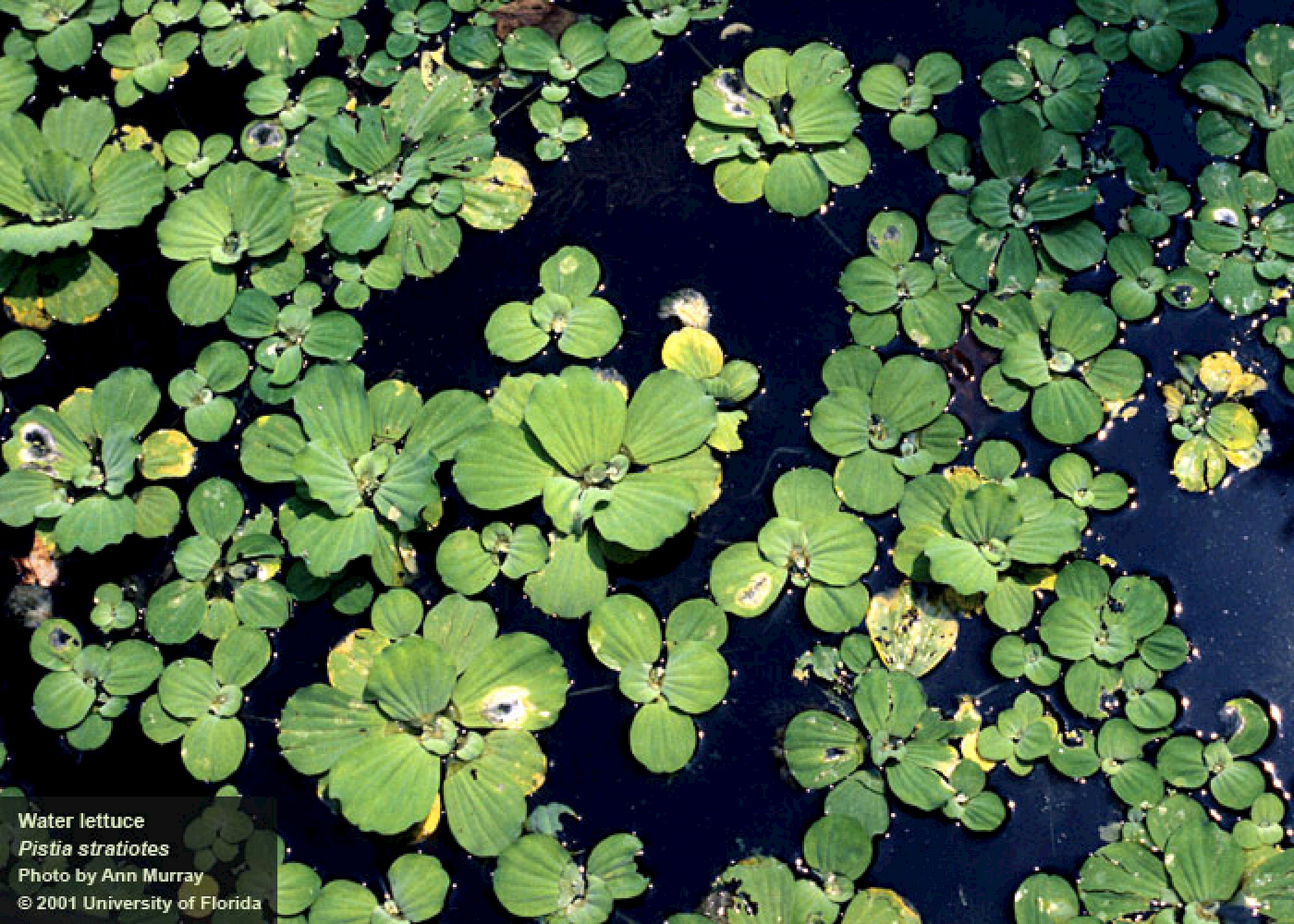
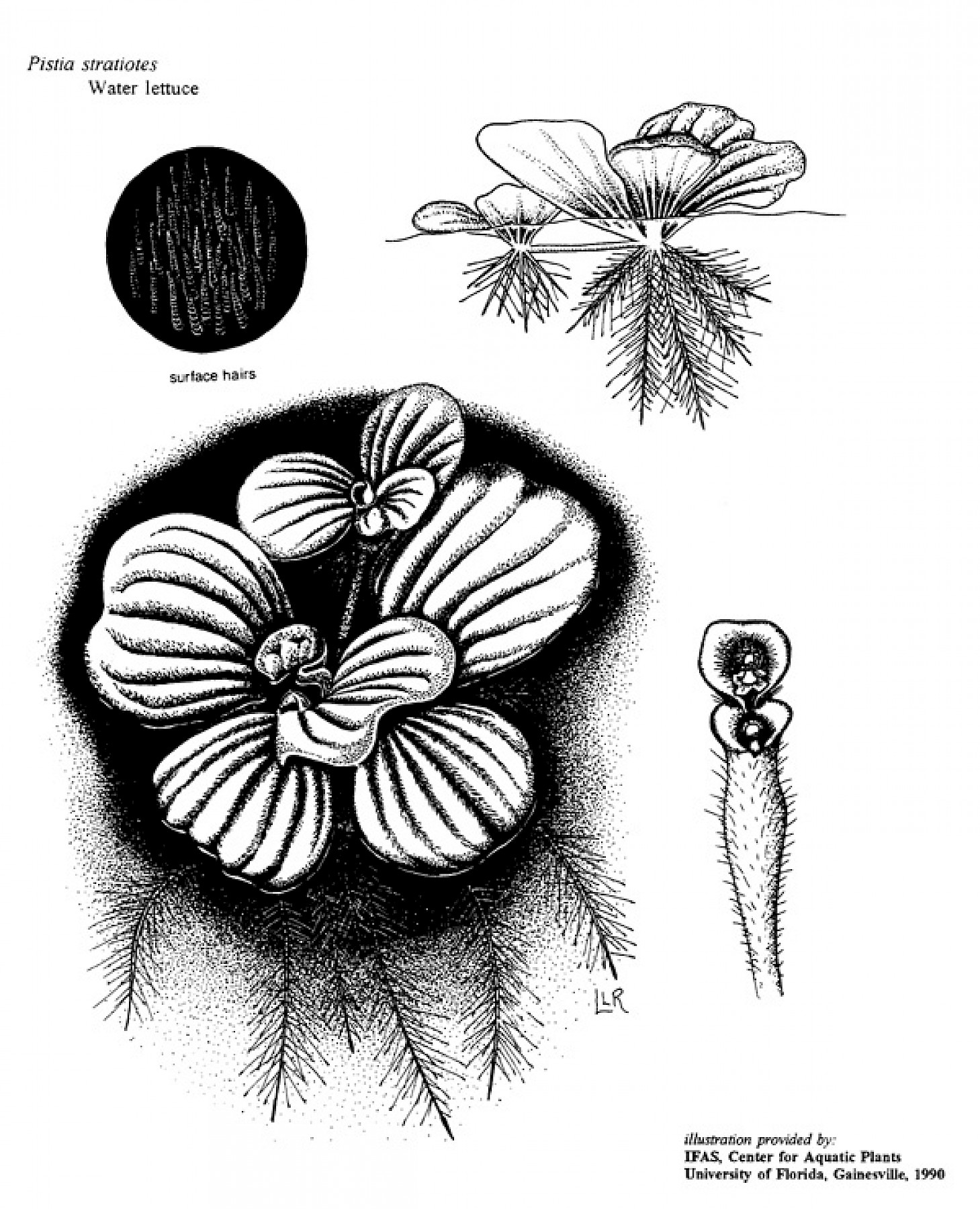
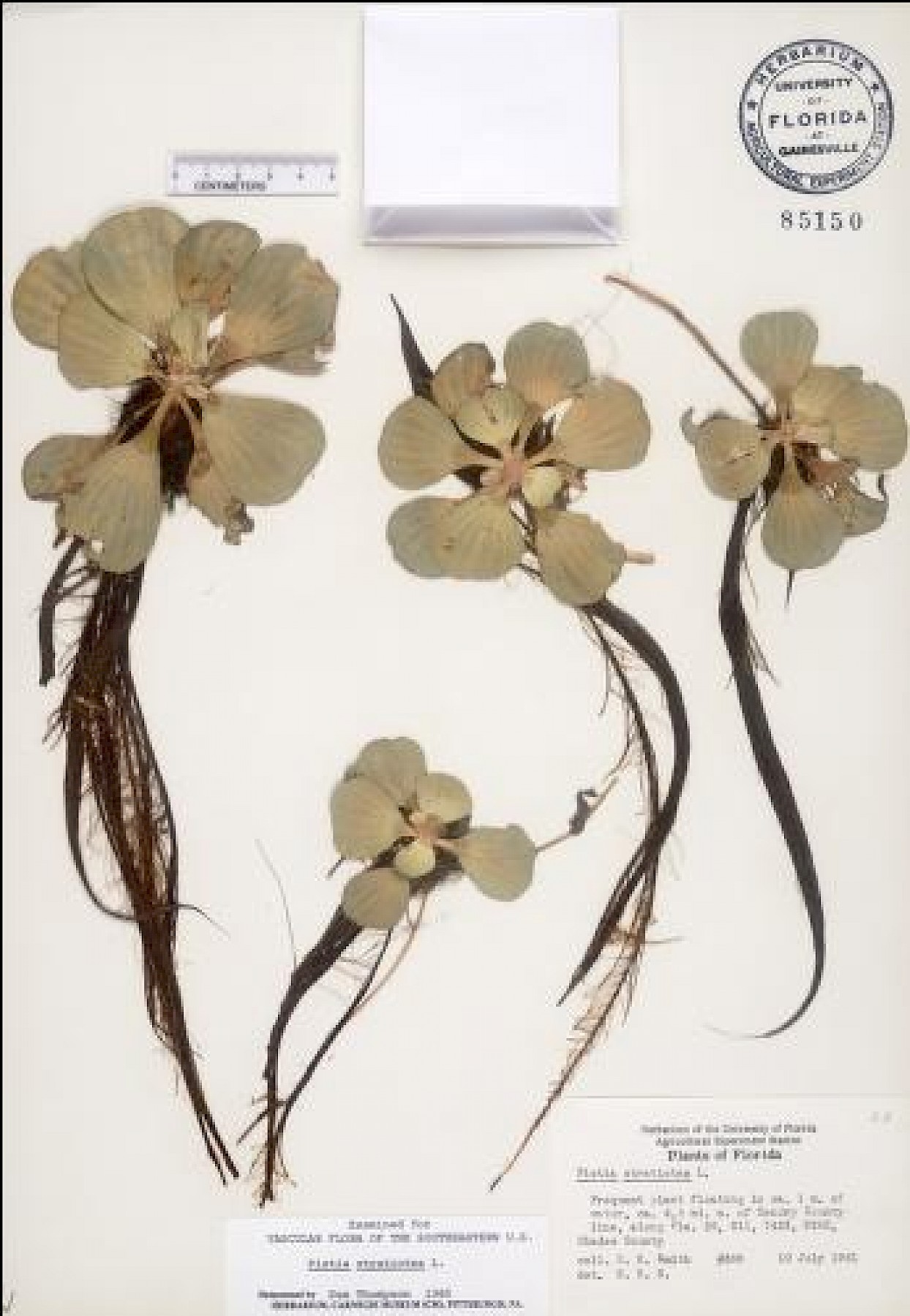
Leaves: wavy or scalloped margins and are thick, light green, covered with short hairs and water-repellant, can reach up to one foot in length; leaves are attached to one another at the plant’s base to form a free-floating rosette.
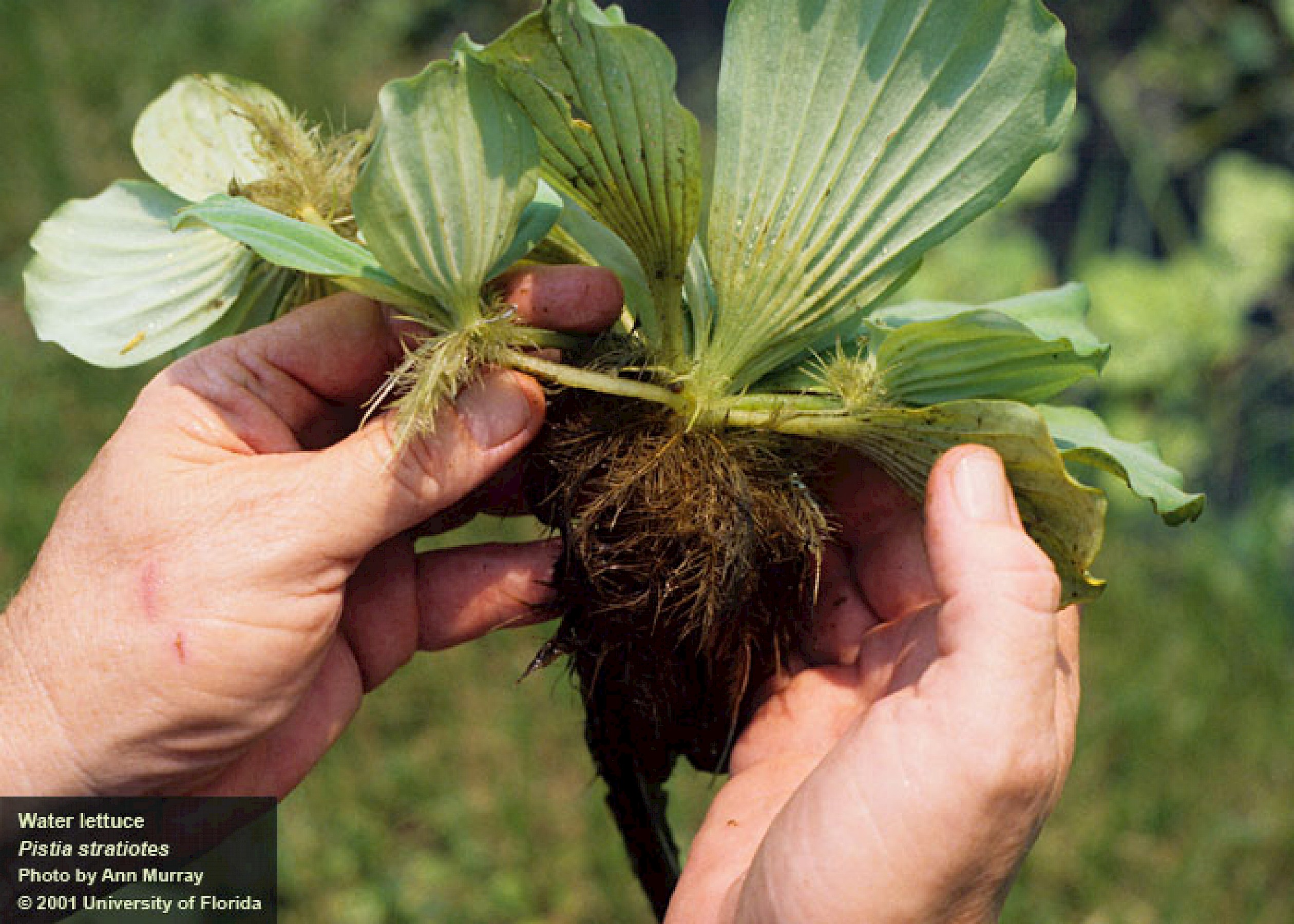
Roots: white to tan, long and feathery and hang beneath the rosette of leaves.
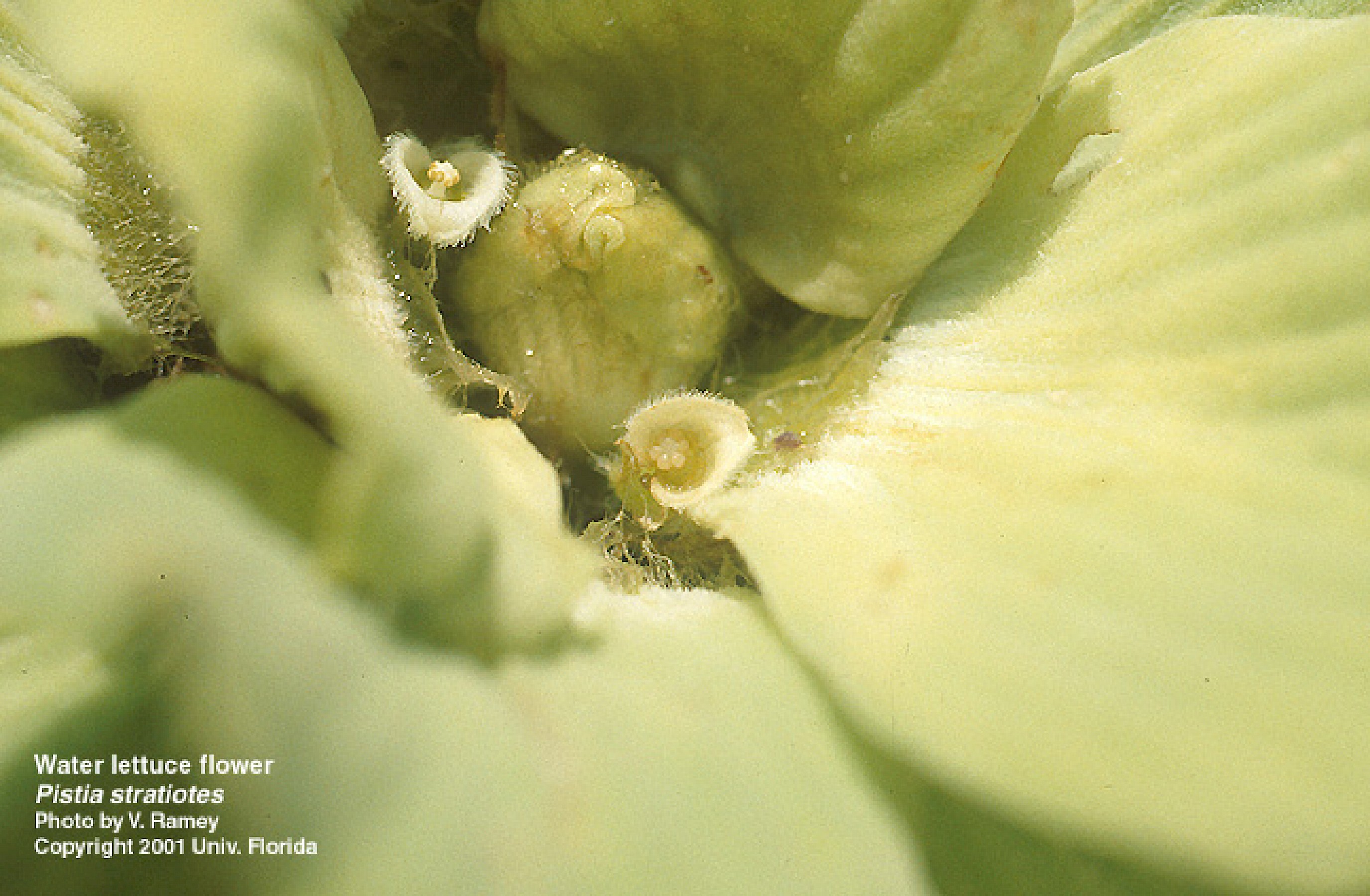
Flowers: inconspicuous, borne in a spathe and spadix arrangement. The greenish spadix, a spike-like structure in the center of the inflorescence that houses separate female and male flowers, is sheathed by the white spathe, a hairy leaf-like bract.
Fruit/Seeds: each 2 mm-long fruit can contain up to 20 tiny, golden-brown seeds.
Distribution in Florida: statewide.
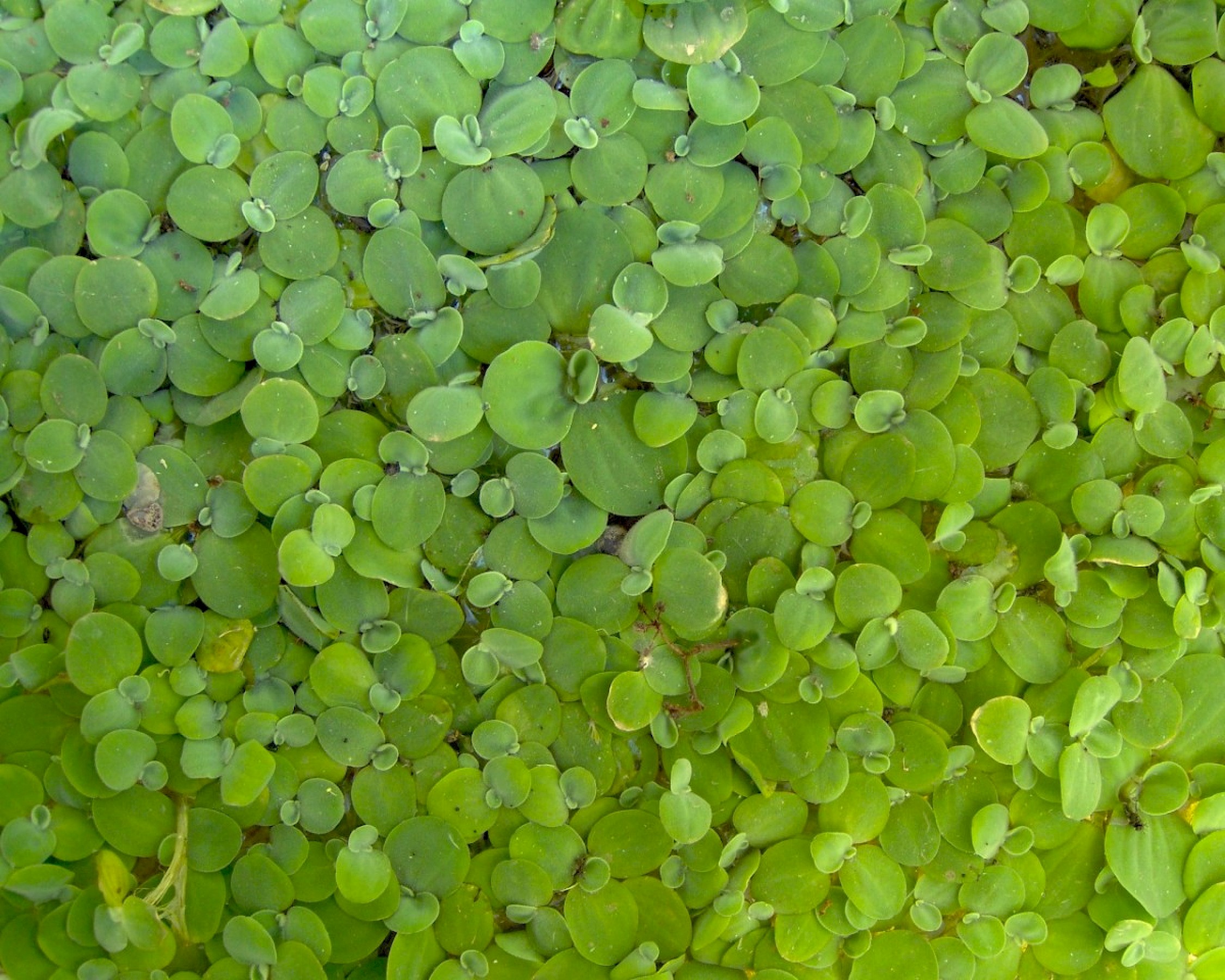
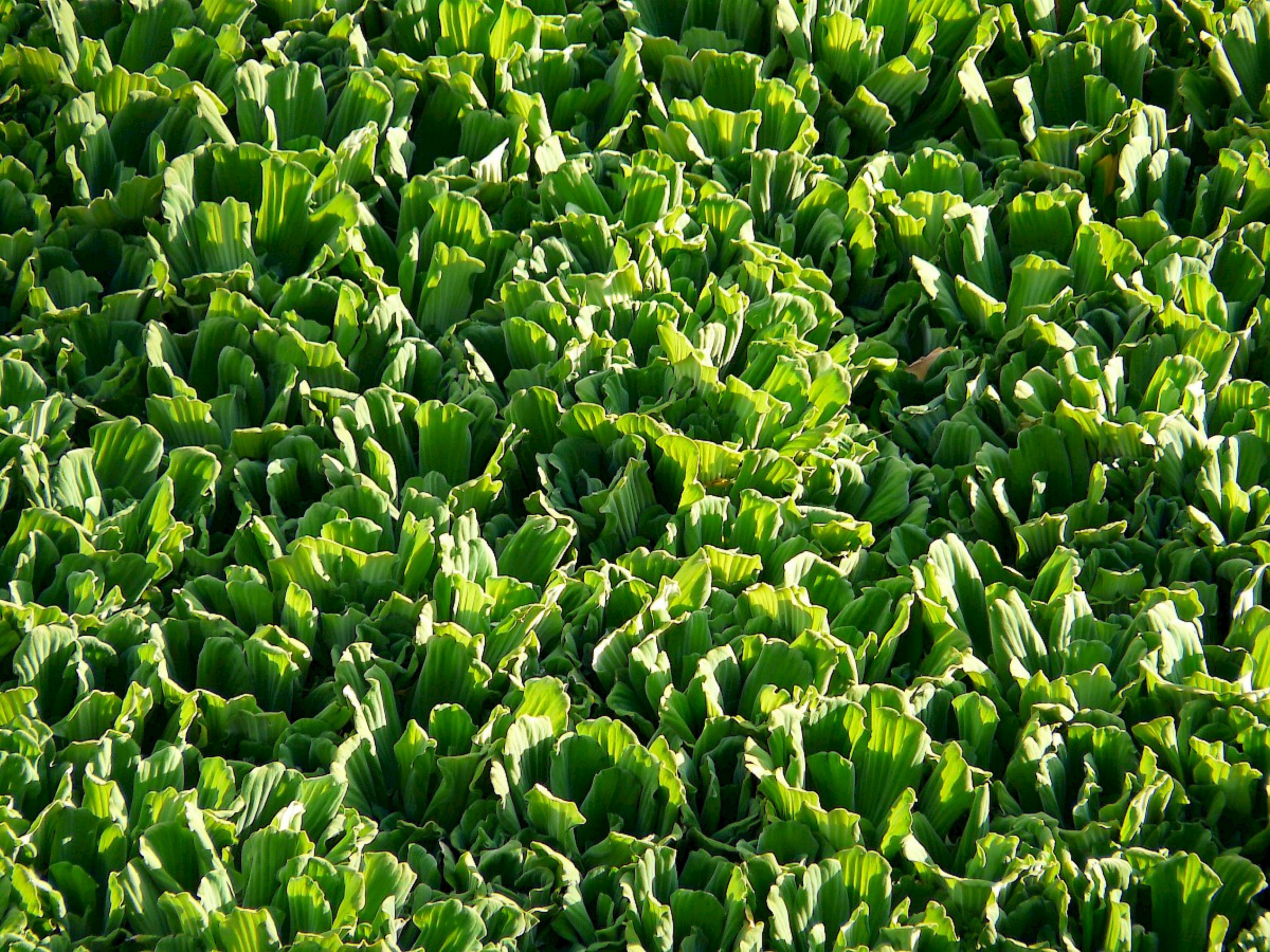
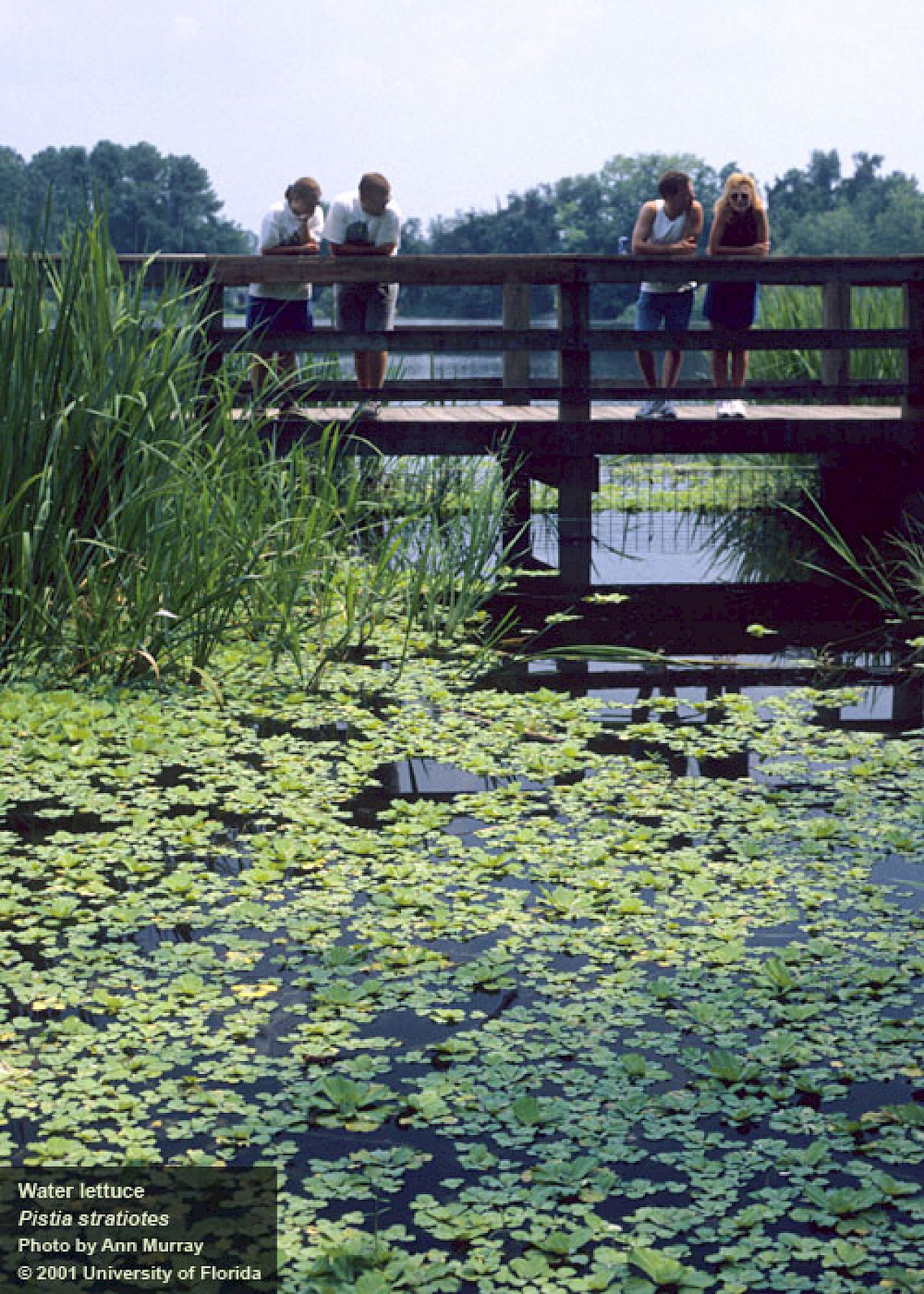
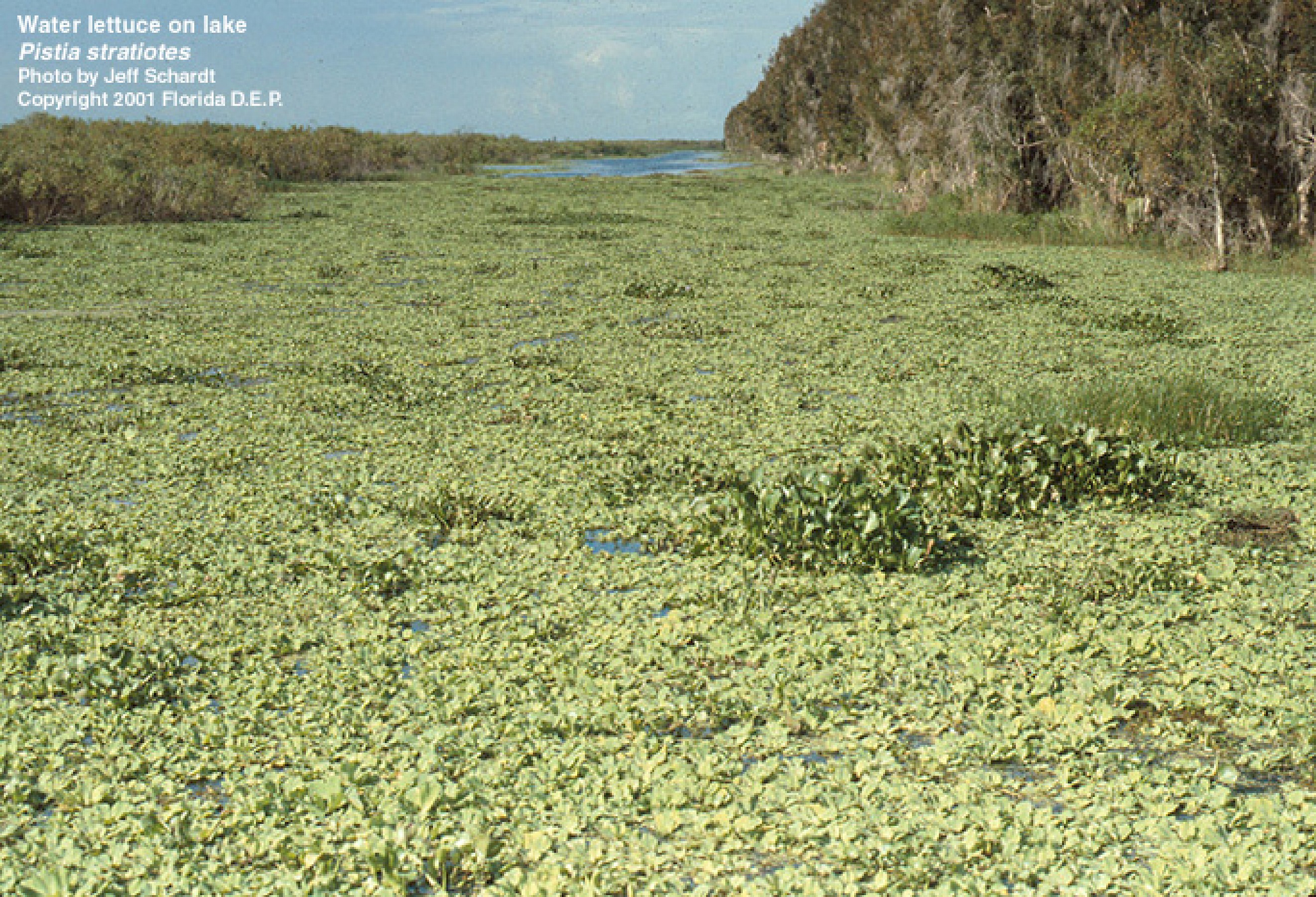
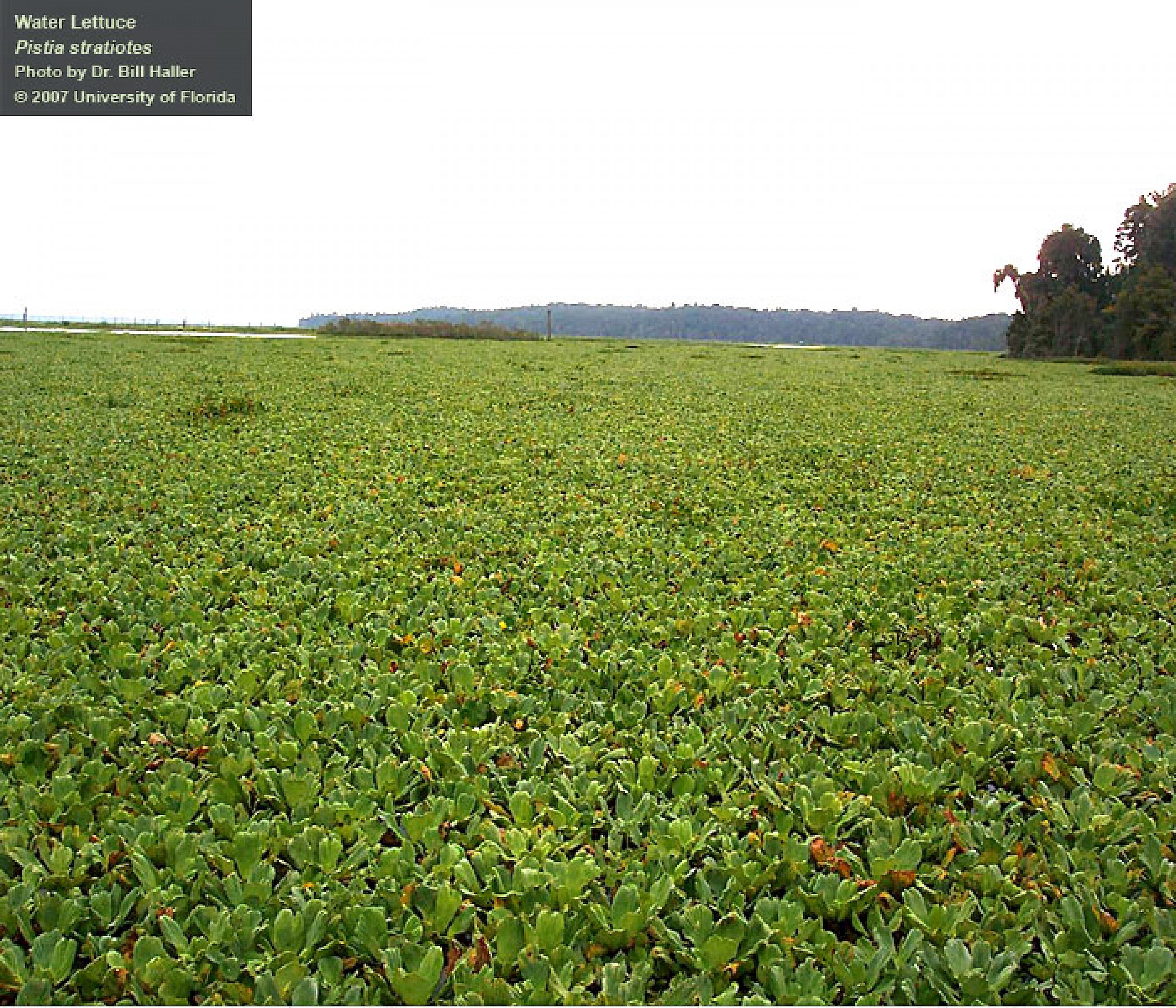
Water lettuce forms dense mats that clog waterways making boating, fishing, and other water activities, impossible. These mats also degrade water quality by blocking the air-water interface and greatly reducing oxygen levels which can result in fish die-off and the overall reduction of aquatic fauna and flora diversity. It can also affect other animal communities by blocking access to the water and/or eliminating spaces the animals depend on for shelter and nesting.
Do not sell, propagate, or move plants. Thoroughly clean boats and equipment before leaving infested waterways.
Small infestations can be hand pulled. Water drawdowns can be used to “strand” and desiccate water lettuce on exposed shorelines, but the time needed to effectively dry large mats of plants can be long.
Mechanical harvesting can be done but the process should be designed to prevent the spread of water lettuce plantlets to other parts of the water body.
The water lettuce leaf moth (Spodoptera pectinicornis) was imported from Thailand and released in Florida in 1990 but failed to establish. The water lettuce leaf weevil (Neohydronomus affinis) was imported from South America to the US in mid-1980s and is now established throughout Florida, but its effect on water lettuce growth in Florida has been negligible.
Herbicide selection is based on water use, selectivity to reduce damage to non-target native plants and cost. Several herbicides can be used as foliar sprays to selectively control water lettuce. Contact herbicides such as diquat, carfentrazone and flumioxazin are quickly absorbed by plant tissue and cause obvious damage within a few days, whereas systemic herbicides such as imazapyr, penoxsulam and bispyribac provide slower but very effective control. Submersed application of the contact herbicide flumioxazin is currently being evaluated for selective control of water lettuce, as are topramezone and the ALS herbicides.
Source and additional details: Biology and Control of Aquatic Plants: Chapter 2:12
Consult your local UF IFAS Extension for further assistance with management recommendations and planning.
Webinar: Water Lettuce History and Control, Dr. Lyn Gettys
UF IFAS Assessment of Non-Native Plants in Florida’s Natural Areas
View records and images from University of Florida Herbarium