
Common asparagus-fern
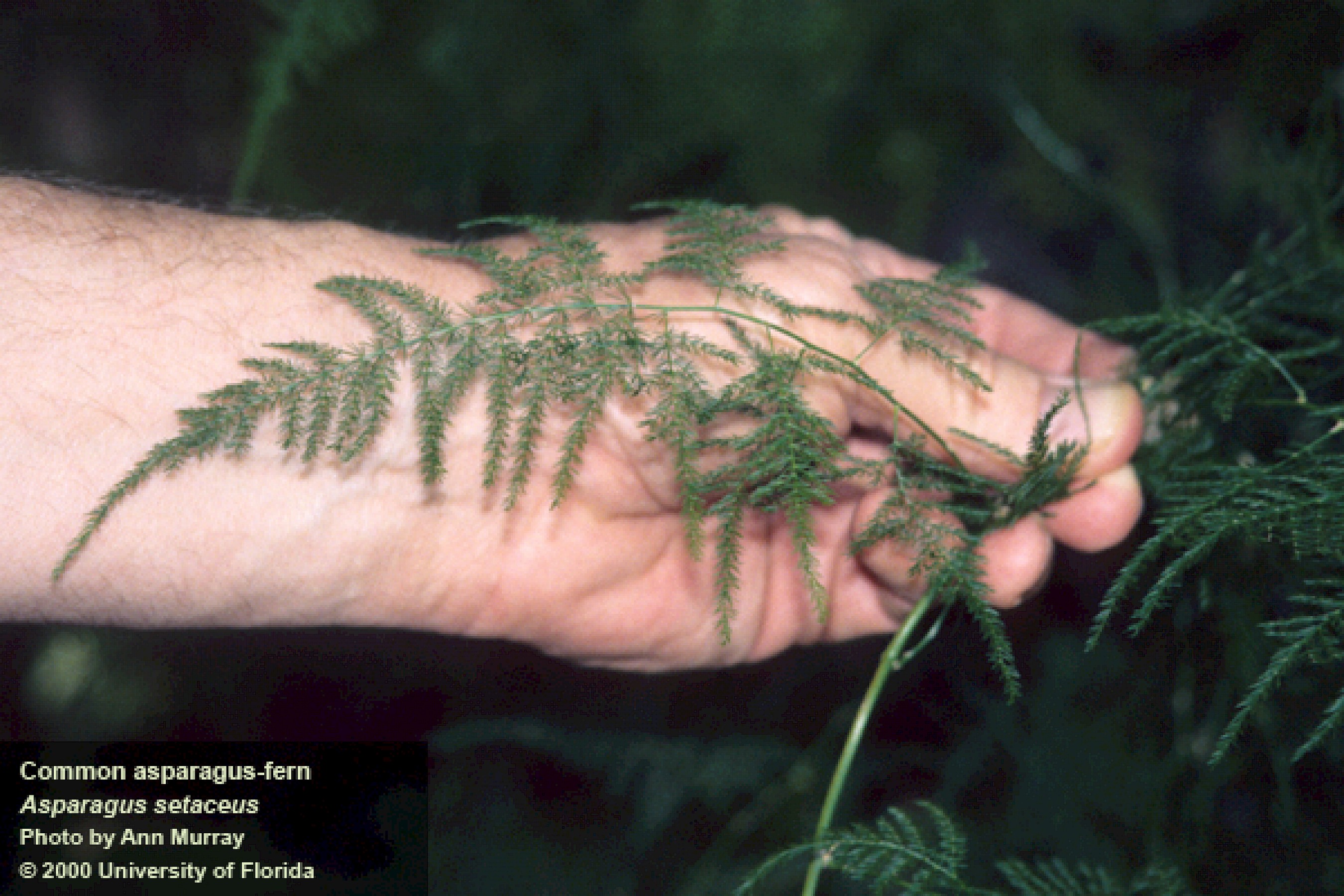
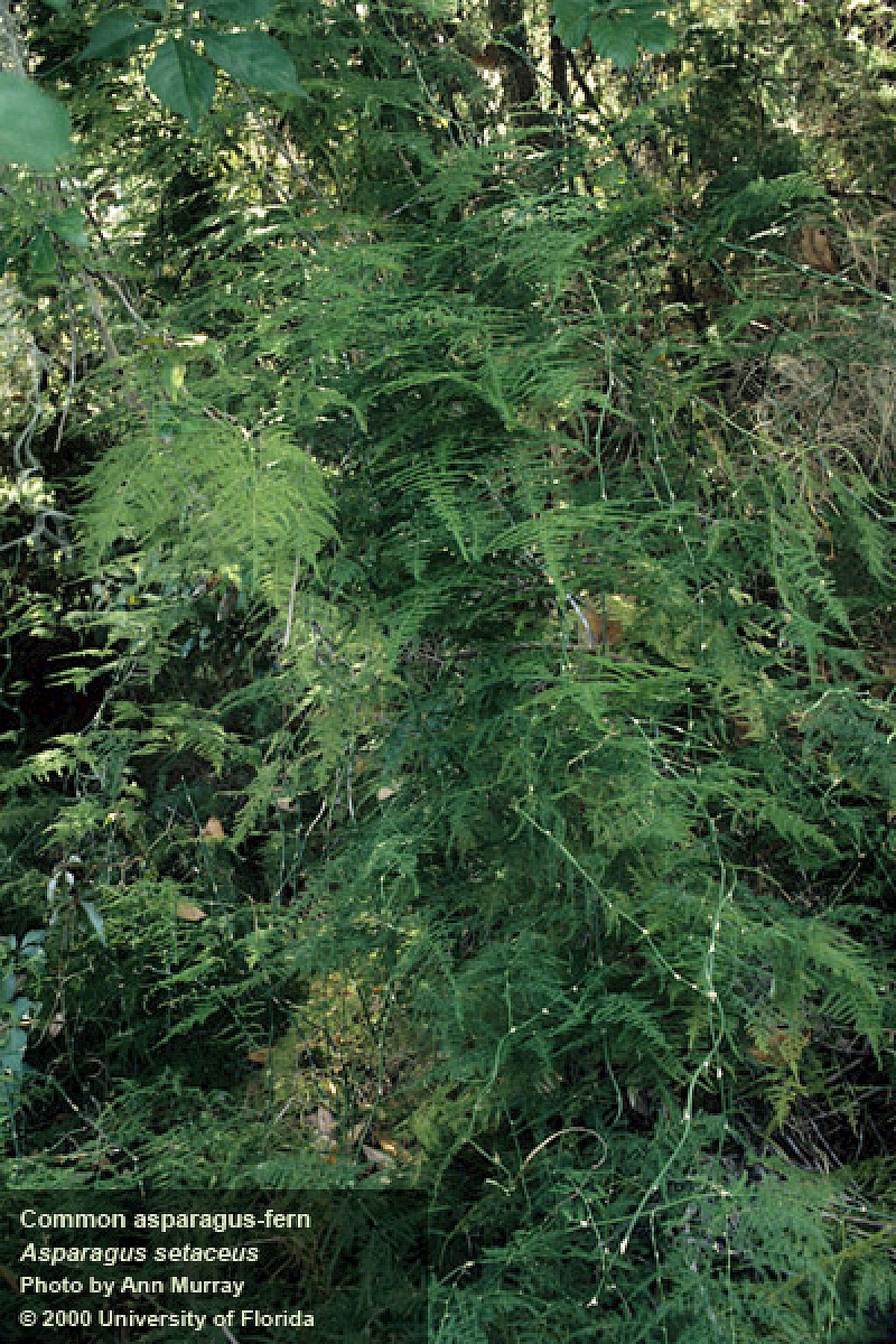
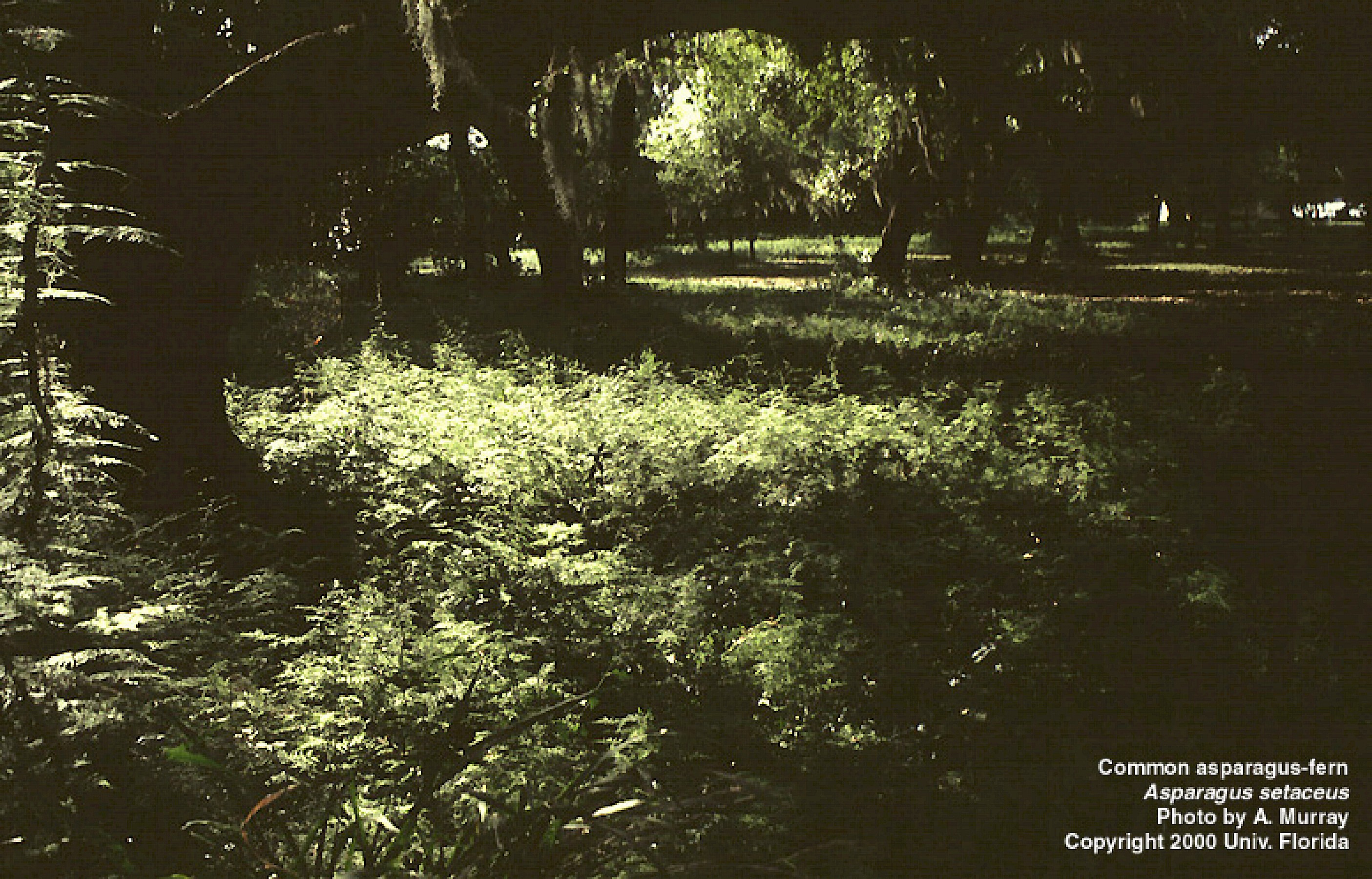
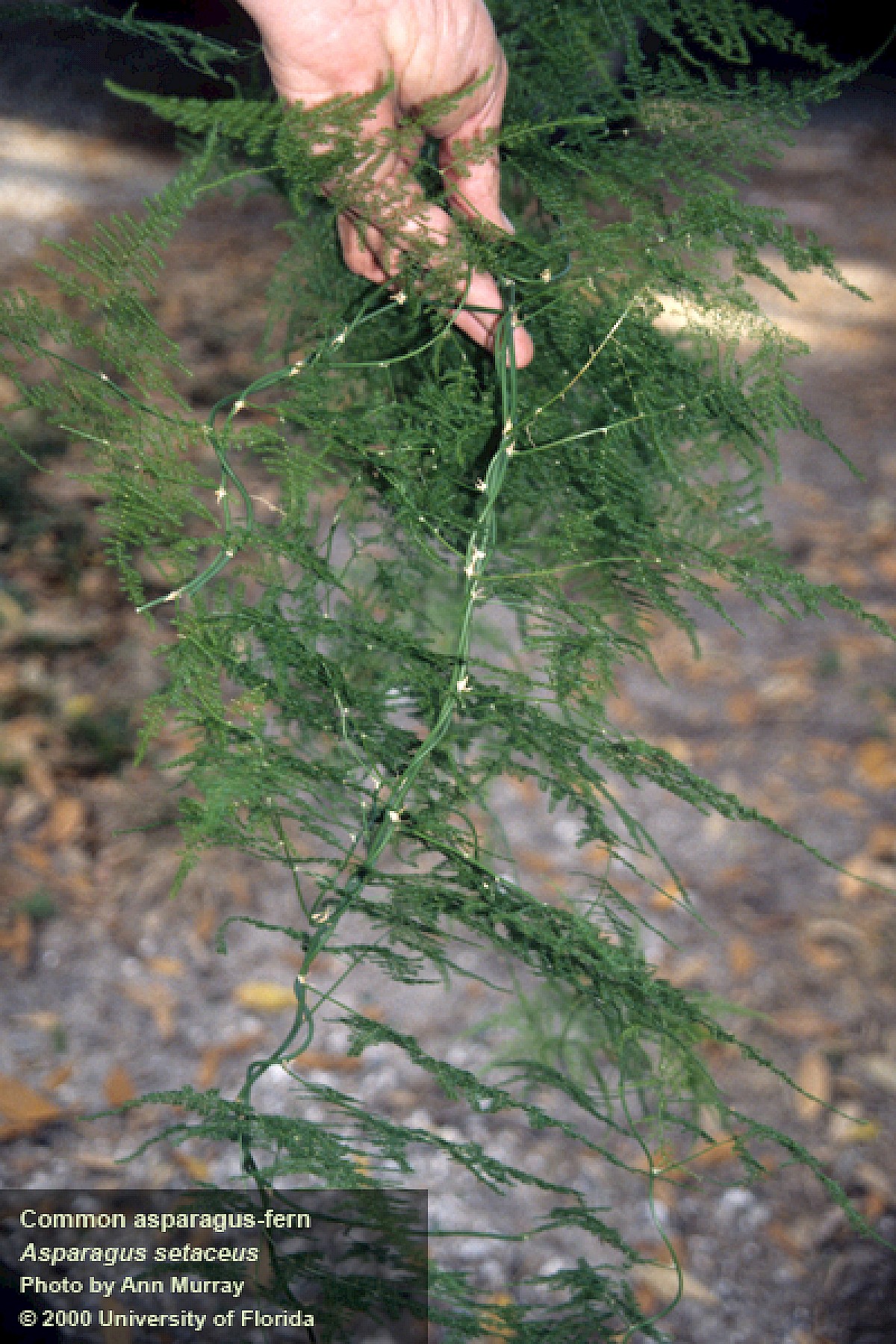
Native to: Eastern and South Africa
This fast-growing species is grown for flower arrangements. It is also planted as an ornamntal or used as an indoor potted plant. Common asparagus-fern escaped cultivation and is now frequently found in disturbed sites throughout the state.
Its extensive climbing habit, thorny stems, enlarged storage roots and small black, bird-dispersed berries combine to make this a particularly difficult weed to eradicate. It is adapted to a variety of soils including sandy, loamy, and heavy clay. Common asparagus-fern is not recommended by UF/IFAS. It is considered a species of caution (requires management to prevent escape) throughout all parts of the state by the UF/IFAS Assessment.
Do not plant this species in home landscapes. Do not transport the plant to new areas.
Removal of existing plants within the landscape should be practiced and removal should occur before seeds are produced. Care must be exercised to prevent seed spread and dispersal during the removal process. The needle-like leaves complicate control efforts, therefore using gloves and clippers is advised.
Small infestations of common asparagus-fern can be controlled by digging out the roots. Remove the entire crown and underground stem to prevent regrowth. Any regrowth that occurs can be kept under control by regular mowing or digging out.
There are no known biological control agents for common asparagus fern.
There is no herbicide currently registered for control of common asparagus-fern, however dicamba, fluroxypyr, and metsulfuron-methyl have been successfully used to control other Asparagus species.
UF/IFAS Assessment of Nonnative Plants in Florida's Natural Areas
USDA Natural Resources Conservation Service- Plants Database
View herbarium images from the University of Florida Herbarium Digital Imaging Projects

