
Rosary pea


Scientific: Abrus precatorius
Common: rosary pea, crab's eyes, jequirity, black-eyed susan
Family: Fabaceae, subfamily Faboideae
Introduction History: Native to tropical Asia. Introduced prior to 1932 [10].
Categorization/Regulation: FISC Category I, UF/IFAS Assessment “Prohibited”
General Description: Vigorous vine that becomes basally woody at older growth stages. Produces a deep swollen taproot with abundant secondary fibrous roots [11].
Habitat: Prefers well-drained, dry soil conditions. Able to grow in almost all Florida soil conditions, except very poorly drained, water-logged areas [11].
Invaded Range: Tropical and subtropical latitudes globally.
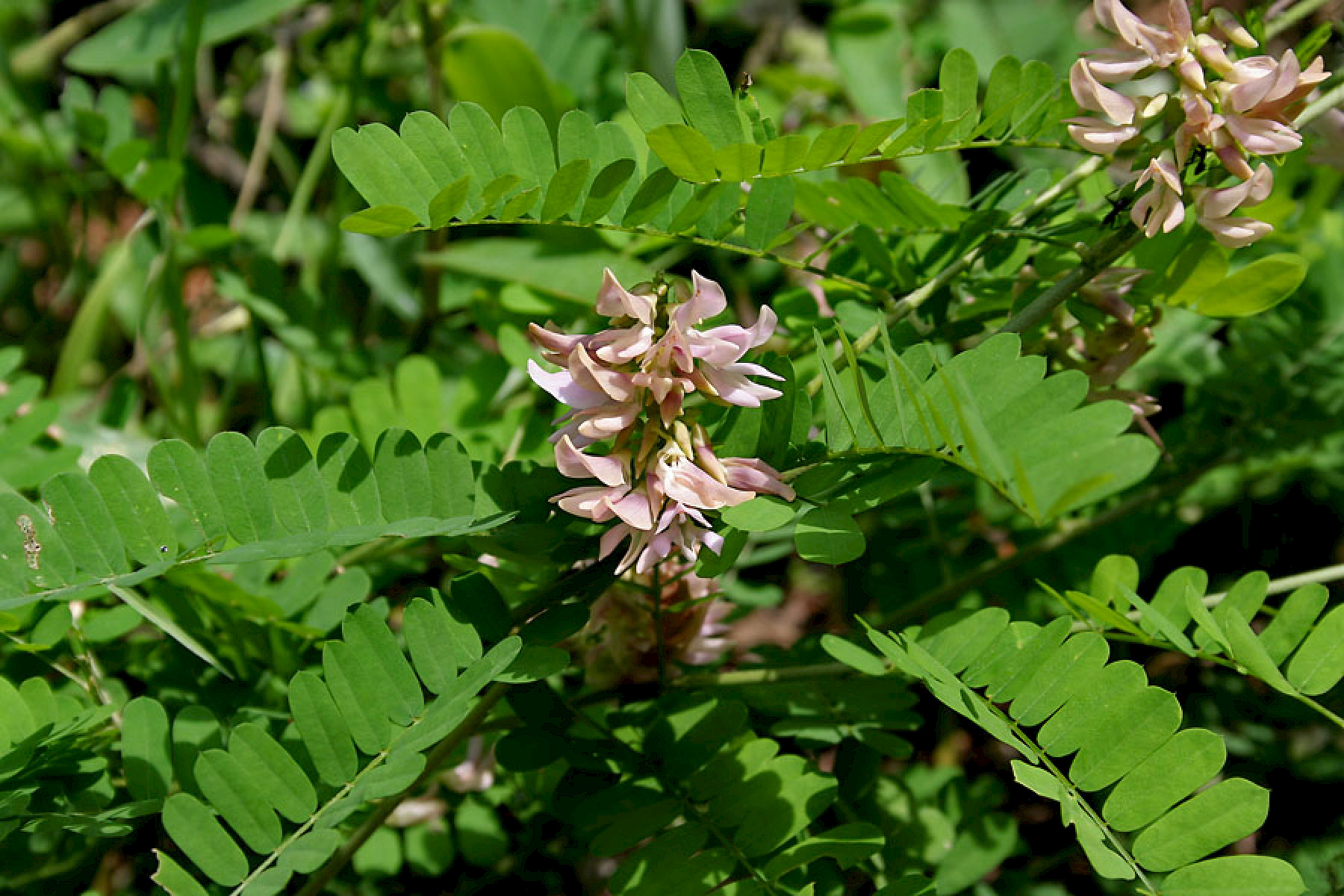
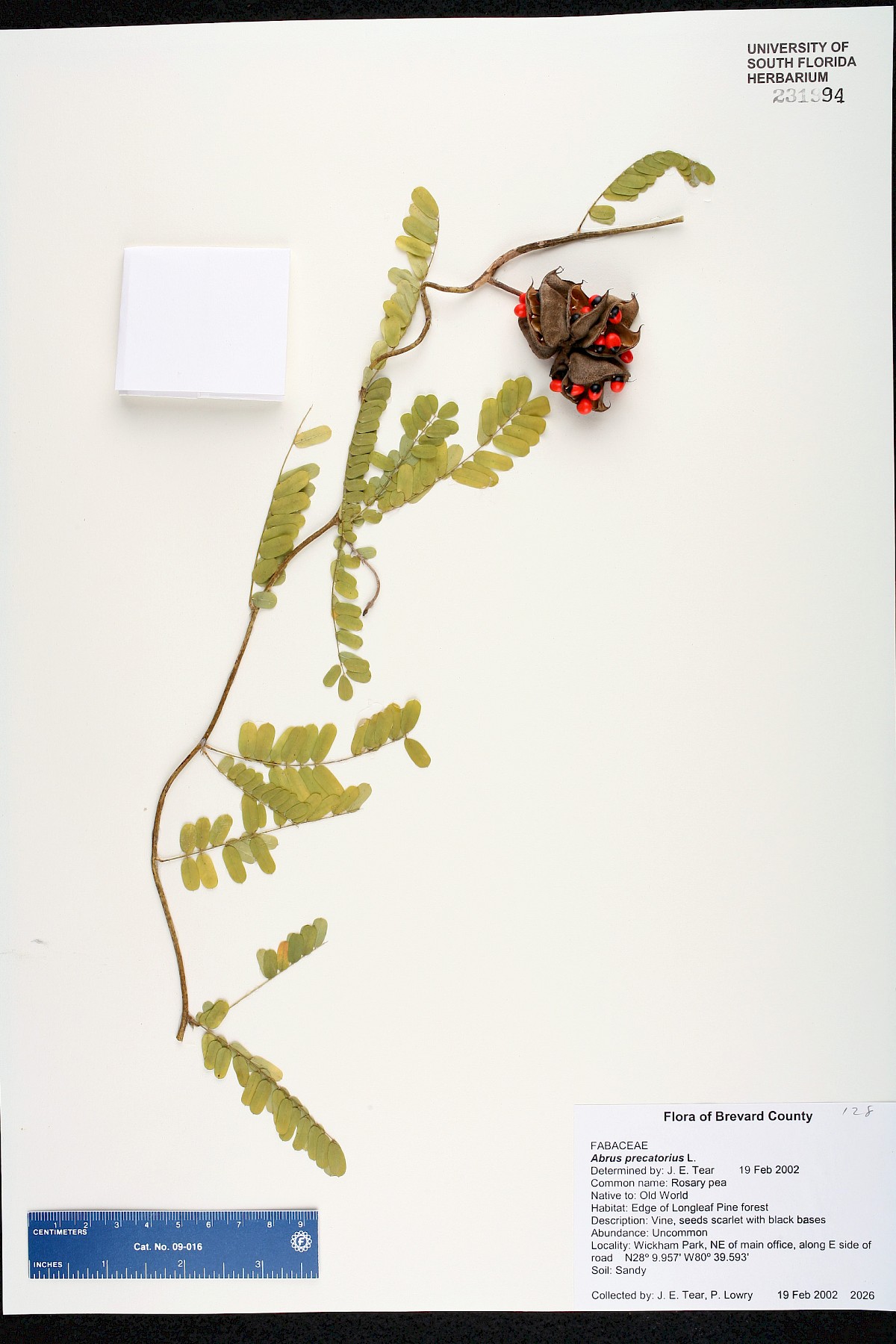
Leaves: Pinnately compound leaves (4-10 cm long) [7].
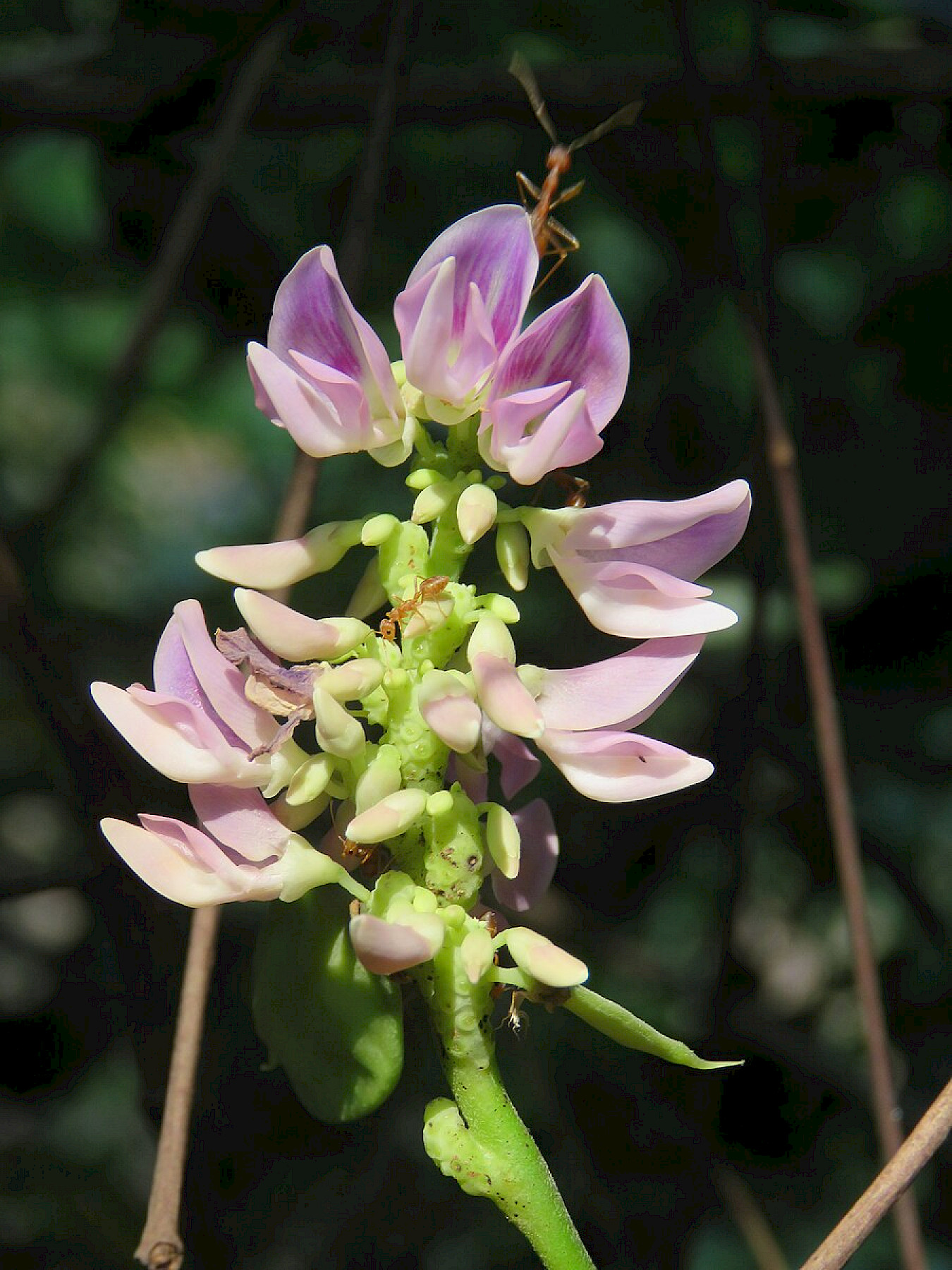
Flowers: Classically formed pea-like flower (5 petals, 2 fused to form keel), normally light-pink in color. Flowering typically during late summer and fall, but can be seen nearly year-round if conditions are favorable.
Fruit: 3-4 cm long legume with sharp tip. Unripe color varies from green to pale yellow. Dries brown. Twisting upon maturity revealing 3-8 seeds (6-7mm diameter) [34]. Fruit can be present year-round and persists on plant if undisturbed.
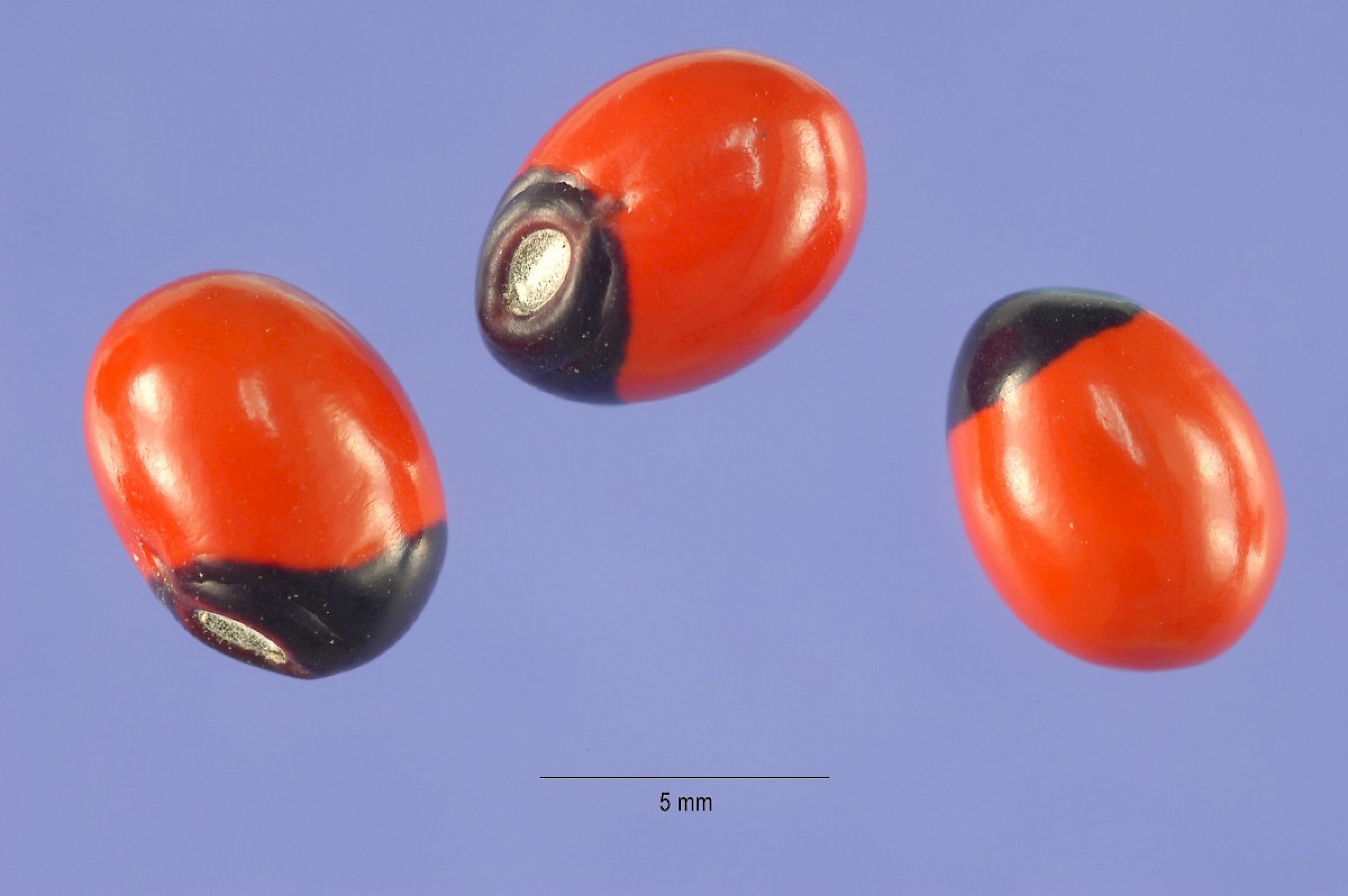
Seeds: Seeds are distinct in appearance and easily identified. Shiny bright red or scarlet color with a dark black spot at their base (hilum). Seeds are most commonly dispersed by birds [33]. They have a well-developed seed coat which promotes longevity in the seed bank due to the impermeability of the seed to water [1]. Germination of seeds has been documented at 40% in 18 days [25]
Human Health Hazard: The seeds of rosary pea contain a powerful toxin (abrin) which inhibits protein synthesis and causes cell death in humans and livestock if seeds are crushed and ingested [17].
Fun Fact: As the common name suggests, the ripe beans of rosary pea have historically been used for jewelry and rosaries [32], as well as a standard unit of mass measure for indigenous groups in India [28].
Abundant seed production and bird dispersion allows for long-distance dispersal, meaning this plant readily invades new habitats [33].
Climbing habit allows for establishment in a variety of light conditions and invasion into tree canopies [33].
Burning can reset mature growth, but germination of seeds improved by fire. Seeds respond positively to smoke [22].
Plant has ability to fix nitrogen, which may alter local native soil nutrient dynamics if highly abundant in an area [13].
Do not plant this species in home landscapes. Do not transport the plant to new areas.
Young plants can be hand-pulled in small scale contexts [23]. Seed management by hand removal is effective for reducing propagule pressure locally [20].
Deep taproot prevents effective mechanical management techniques for older, established plants.
No known biocontrol actively implemented within the United States. Plants are known to have insecticidal properties which further complicates research [26]. Bruchid beetles (Caryopemon) have been documented to feed on seeds of this plant [3, 21, 31]. Heavy grazing has been shown to control this plant [11]. However, caution should be used if livestock have access to forage on this plant and grazing should only be allowed if seeds are not present on plants.
Foliar applications of 5% glyphosate or 0.12-0.25% aminopyralid [6]. Basal stem treatment with 10% triclopyr ester in oil carrier is effective for mature plants or if foliage is not accessible or mixed with non-target canopy [20]. Cut-stump application is also effective with 50% triclopyr amine in water or 10% triclopyr ester in oil [18, 23]. Revisiting invaded site for follow-up treatment is necessary due to abundant and persistent seed bank [6, 33].

